Nakamise-dori at a glance
Nakamise-dori is the paved lane between the outer gate, Kaminarimon, and the inner gate, Hozomon. It is about 250 m long, so the walk takes only a few minutes, but most visitors take much longer. Shops line both sides, and nearly everyone who goes to the main hall of Senso-ji walks along it.
The street is part of a normal temple visit and costs nothing to enter. What you spend depends on the shops you choose. Because each shop sets its own hours, there is no single opening time for the whole street. Read on for how to plan around that.
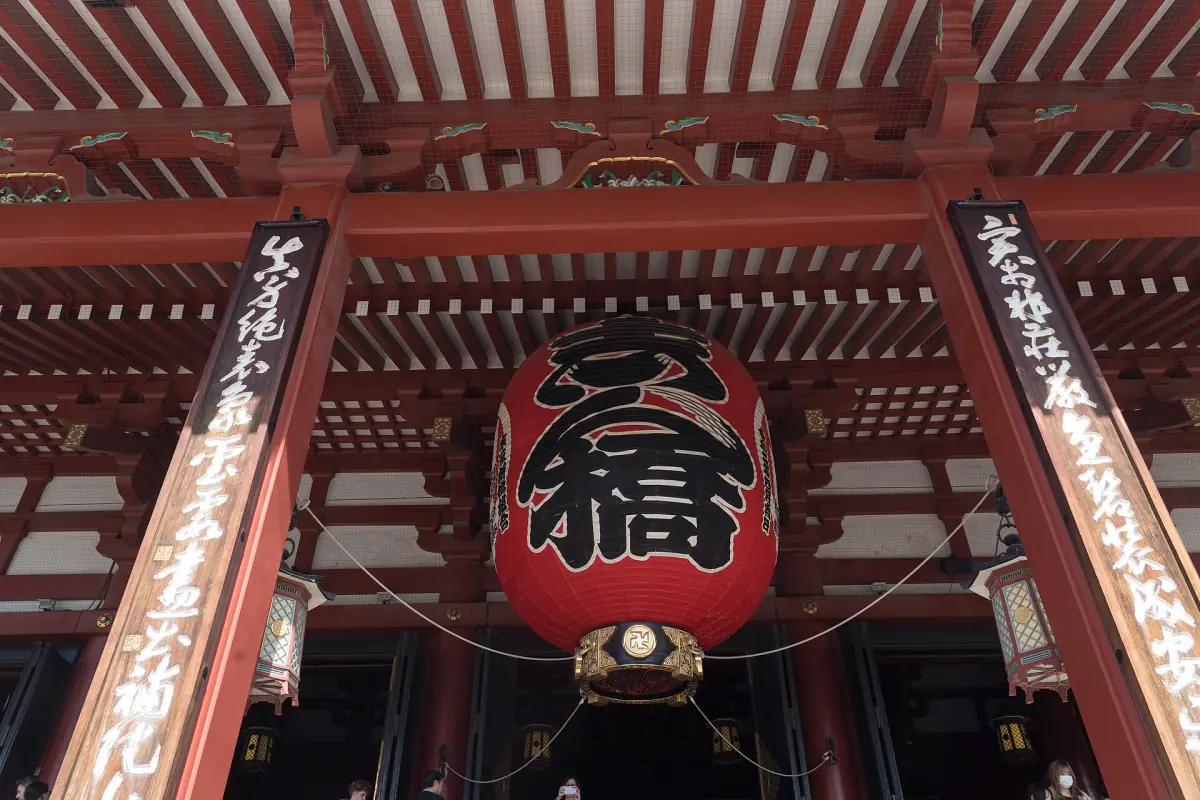
What you walk through
The route in the order you meet it.
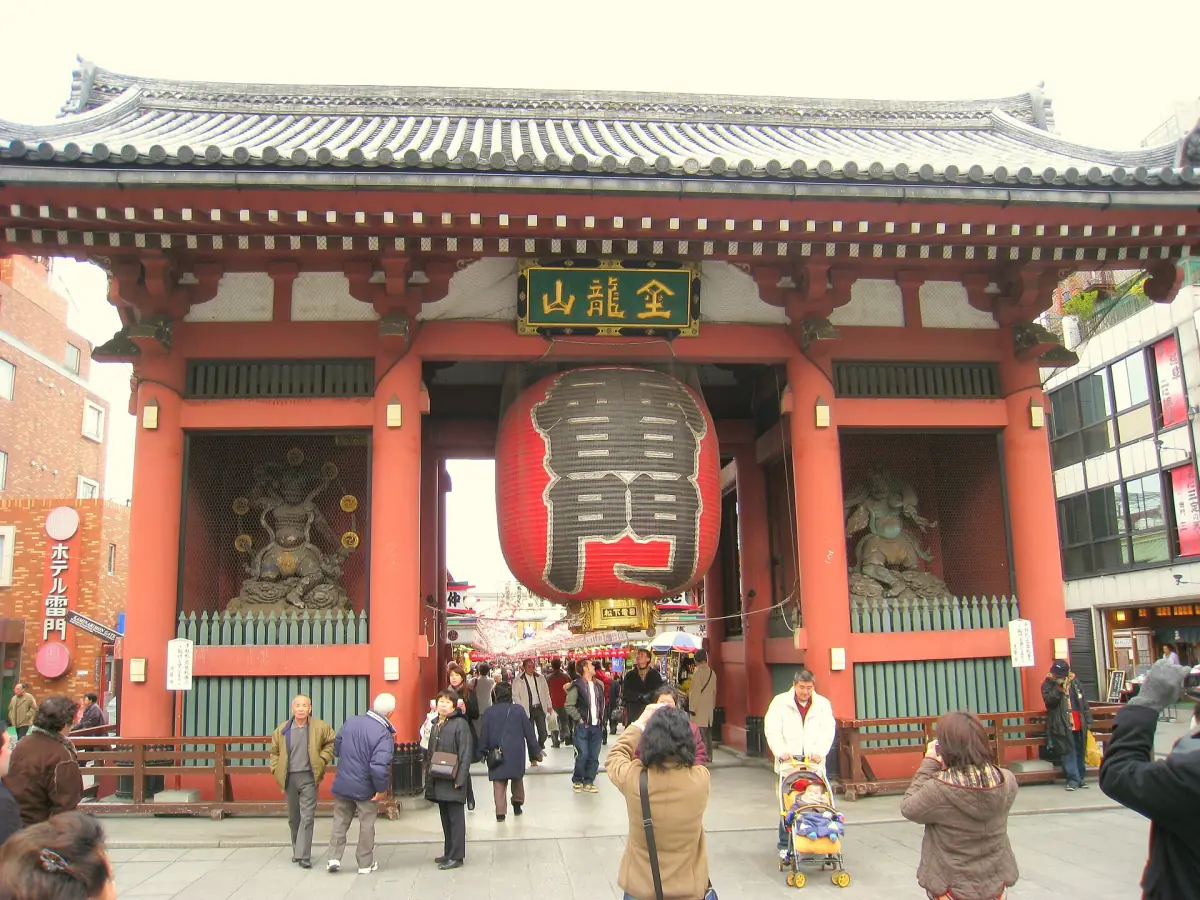
Start at Kaminarimon
The street begins just inside the big red gate with its giant lantern. If you want photos of the gate without a crowd, take them before you step onto the street. The gate has its own page.
Kaminarimon guide →The shops
The shops sell snacks and traditional craft goods and souvenirs. Known local snacks include ningyo-yaki and kaminari-okoshi. Prices are set by each shop, so look at the board or ask before you buy.
Hozomon at the far end
The street ends at the inner gate, also called Niomon, which has two guardian figures. The gate you see today dates from 1964. Its lantern is 3.75 m high, 2.7 m wide and weighs about 450 kg, which is smaller than the lantern at Kaminarimon.
Then the main hall
Past Hozomon you reach the main hall and the incense burner in front of it. Everything beyond the street is the temple itself, so the pace usually slows down there.
Etiquette at Senso-ji →Our picks: Nakamise-dori
A walk along the shopping street, an evening version and a food walk.
Hand-picked tours, booked through GetYourGuide. Prices are indicative starting prices in US dollars (as of October 2026). Tap a tour for live availability and the current price in your currency.
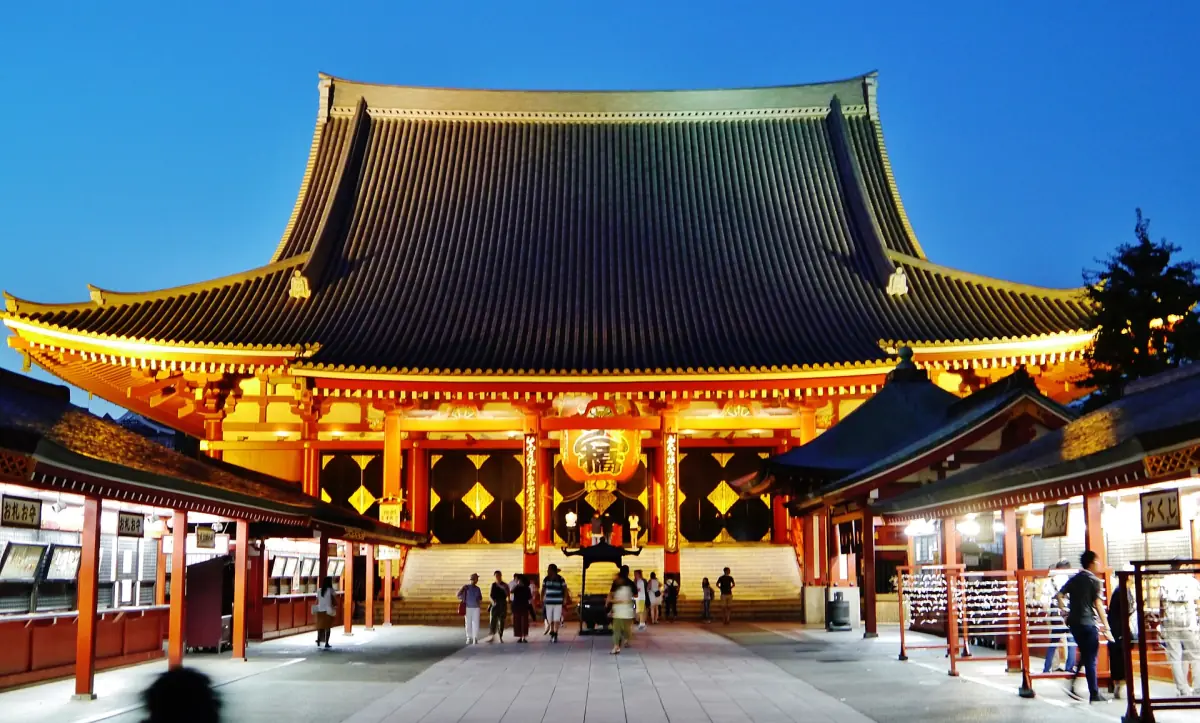
Senso-ji at night with izakaya stops
A local guide, an evening walk past Senso-ji and Nakamise, two drinks and street-food tastings, with a maximum of five guests. Getting there, extra food and drinks and tips cost extra.
Check availability →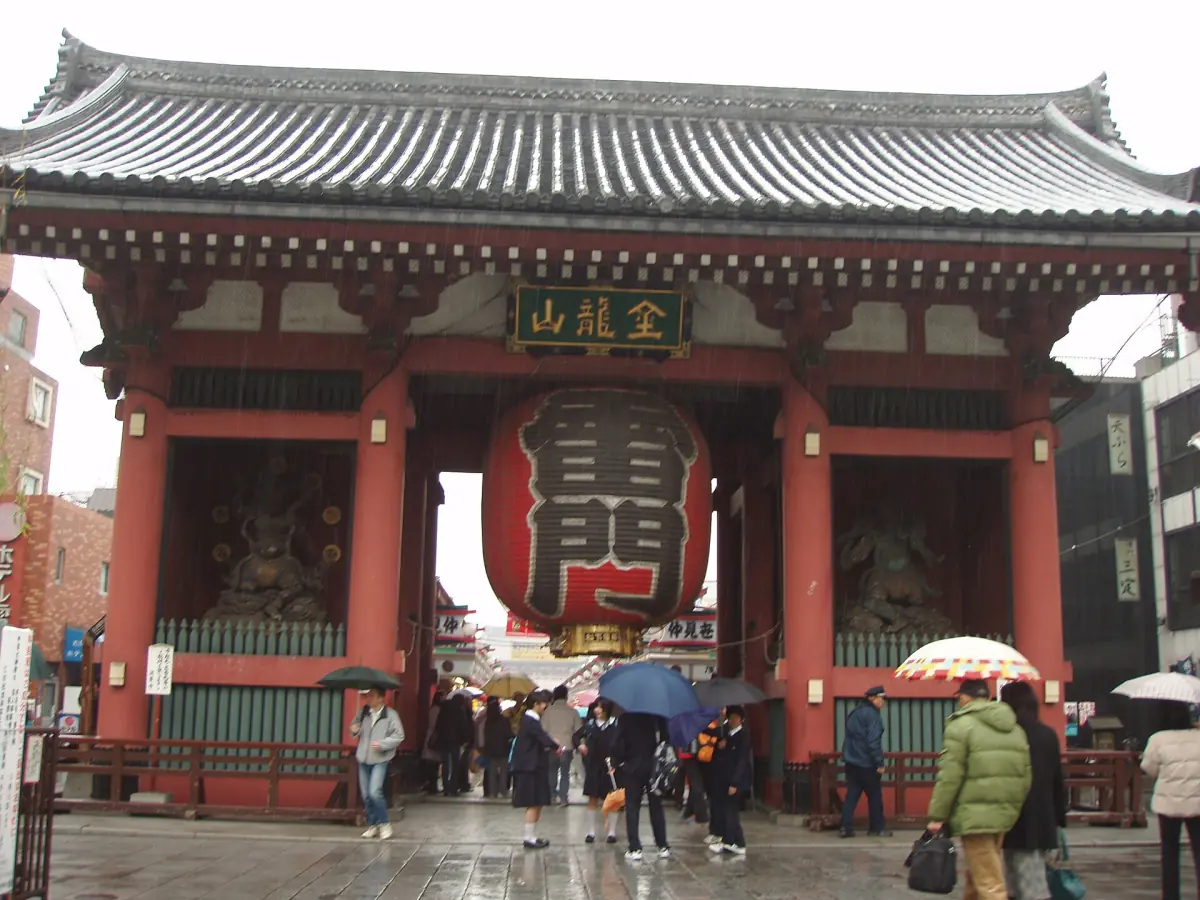
Asakusa food walk with 12 dishes
Twelve Japanese dishes and two drinks on a 2.5-hour walk in English. Hotel pickup is not included.
Check availability →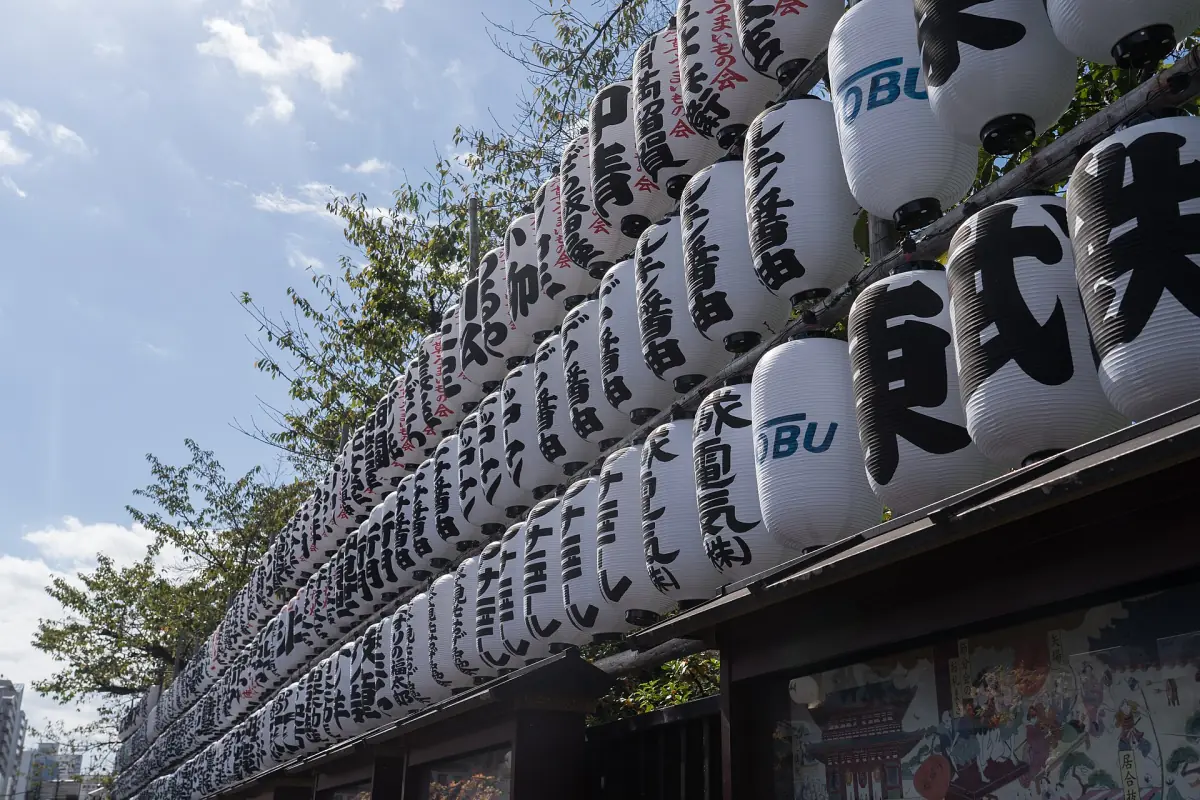
Two-hour walk through Asakusa and Senso-ji
Two hours with a guide through Asakusa, Senso-ji and Nakamise. Tips are not included.
Check availability →Food and walking tours around Nakamise-dori
Guided walks and tastings in Asakusa, with live prices and availability.
Eating, shopping and shop hours
A few practical points that save time on the street.
Buy first, eat apart
The shopping street asks visitors not to eat while walking along it. Buy your snack, then ask the shop where it would like you to eat it. This is a courtesy to the street, not a law with a penalty.
No fixed hours
Hours and closing days differ from shop to shop. You cannot count on every shop being open at the same time, so check the sign at the shop you want before you plan around it.
Payment
Not every shop takes the same payment methods. Carry some cash in yen as well as a card, so you are not stuck at a shop that takes only one.
Souvenirs
Traditional craft goods and souvenirs are the second pillar of the street, next to snacks. If you want gifts from somewhere with more variety, Shibuya's shopping guide covers a very different side of Tokyo.
When to go and what to expect
The street is open to walk through at all hours, but the shops are not.
| Situation | What to expect |
|---|---|
| Daytime | Shops open at times set by each shop; the street can be very full |
| After the shops close | The street stays open to walk; the painted shutters of the closed shops are visible |
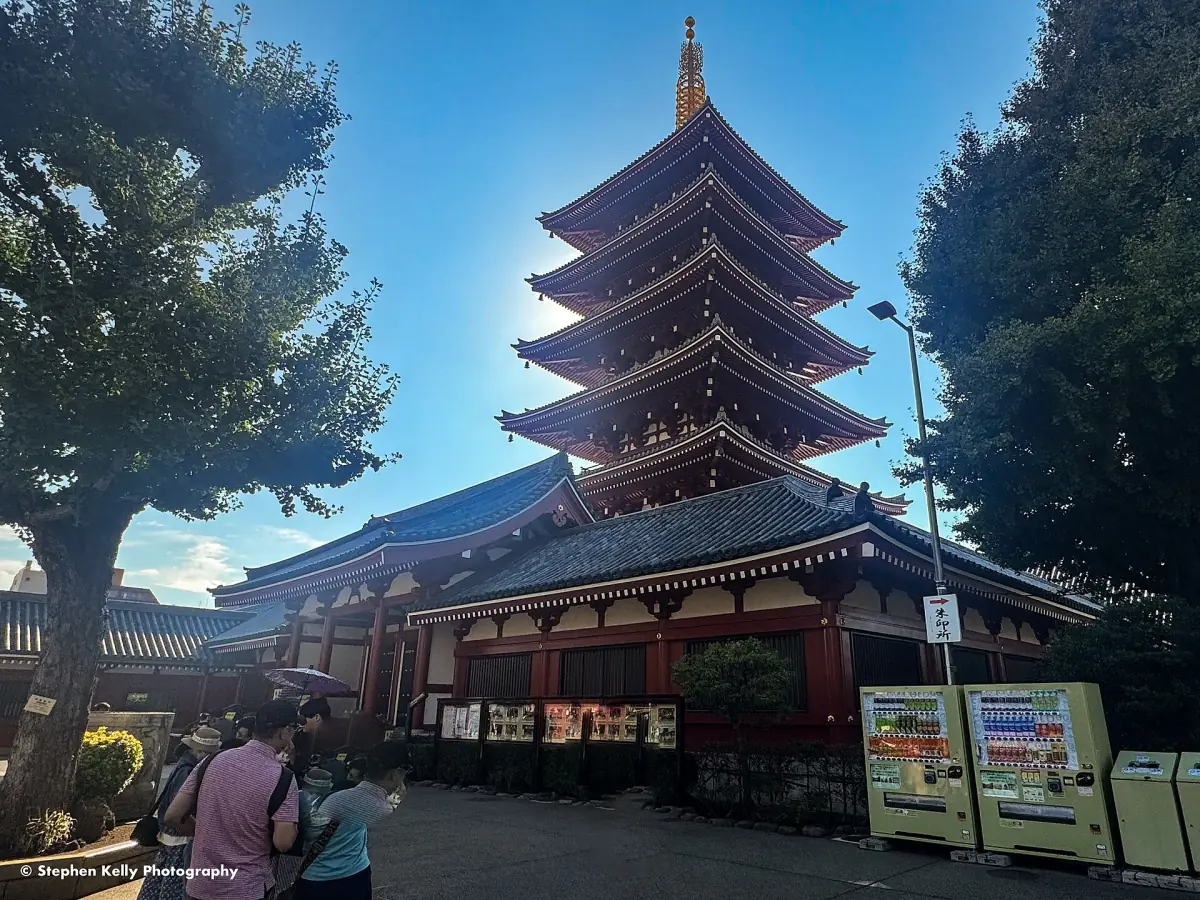
| Evening | The main hall, pagoda, Hozomon and Kaminarimon are lit from sunset until about 23:00 |
| 1–3 January | Very heavy crowds for the new-year visit; guided routes may apply and Nakamise can serve as a one-way approach |
| Sanja Matsuri, 14–16 May 2027 | Festival days in Asakusa; the programme can change, see the Sanja Matsuri guide |
A street that is open at night does not mean the shops are open. For the main hall, the grounds are open around the clock, but the hall itself keeps set hours. The full times are on the opening hours page.
A little history
The street is older than the buildings that surround it.
Nakamise-dori goes back to the late 1600s or early 1700s. Dates given for its start run from around 1685 to the years 1688–1735, so treat the exact year as open. The wider story of the temple, including the rebuilding after 1945, is on the history page.
If the main street is too full, the lanes behind the rows of shops are usually quieter. They are a good way to move through Asakusa while the crowd moves along the main street.
Nakamise-dori: frequently asked questions
How long is Nakamise-dori?
About 250 m between Kaminarimon and Hozomon. Walking it without stops takes only a few minutes, but with shops and crowds it takes longer.
Is Nakamise-dori open at night?
You can walk the street at any hour, but the shops keep their own hours and are not open all night. After closing, you can still see the painted shutters.
What are the opening hours of the shops?
They differ by shop, and closing days differ as well. There is no single set of hours for the whole street, so check the signs at the shop you want.
Can I eat while walking on Nakamise-dori?
The street asks visitors not to. Buy your snack, then ask the shop where to eat it. It helps keep the lane clear for others.
How many shops are there?
One count gives 87 shops, 52 on the east side and 35 on the west side. Another gives about 90. The number changes over time.
How crowded is it?
It can be very full during the day, and especially around the new year and festivals. The lanes behind the shop rows are usually quieter.